Trading basicsTopic guide
Trading Basics
Answer
This hub answers "understand first, then choose" questions: how spot differs from futures, why the spread shows a floating loss right after entry, how cross and isolated margin share risk, and what you actually buy with tokenized US stocks / RWA. For how large a position to open, go to Position sizing. For exchange how-tos, see Exchange Guides.
Contents
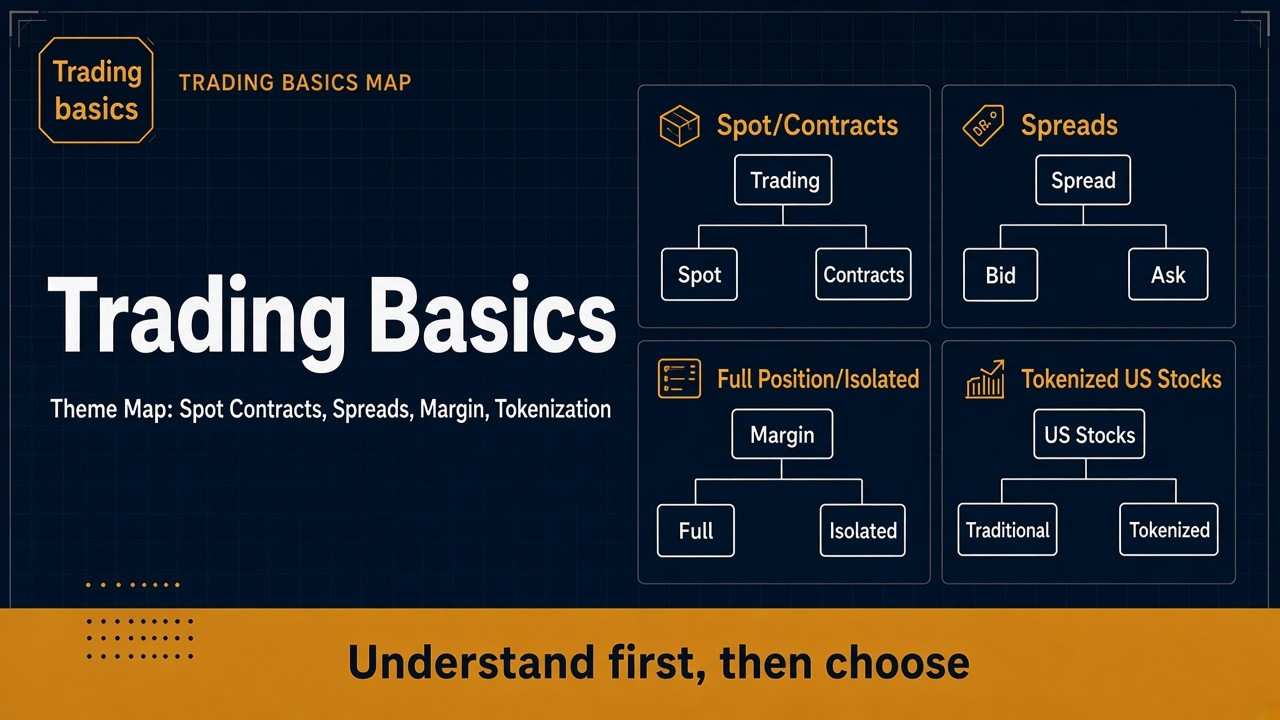
What to read in this topic
- ComparisonSpot vs Futures Trading: What's the Difference?How spot and futures/derivatives (including common perpetuals and CFD-style products) differ in what you hold, leverage and margin, loss paths, and holding costs — plus a short self-check before you choose. Education only, not financial advice.
- ConceptWhat Is the Spread?The spread is the gap between Ask and Bid. Why a fresh market buy often shows a small floating loss, fixed vs floating spreads, and what to check before you order. Education only — no promised cost numbers.
- ComparisonCross vs Isolated Margin: What's the Difference?How Cross and Isolated margin modes share collateral, where liquidation losses stop, capital efficiency, and a short self-check before you choose. Education only, not financial advice.
- ConceptWhat Are Tokenized US Stocks?What tokenized US stocks (RWA on-chain stock tokens) usually are: price exposure, not shareholder identity. Contrast with broker shares, CEX spot, and futures — plus region eligibility, off-hours spreads, and issuer risk. Education only, not financial advice.
What this page does not cover
- No tips on specific symbols or leverage multiples.
- Concept pages are not click-by-click tutorials for one exchange.
- This hub is not financial advice.
FAQ
Where should a beginner start?
Most people start with Spot vs Futures Trading: What's the Difference?, then What Is the Spread? for cost.
How does this relate to position sizing?
Basics pages explain product and cost shapes; how large one trade should be is in Position sizing and the Position Size Calculator.